Is There Alien Life on the Moon? Shocking New Science Says Maybe!
You stand on the Moon. The ground feels dusty and gray. No air. No sound. Just endless quiet. For years, experts said no way life could survive here. Too hot by day. Too cold by night. Radiation everywhere. But new science just changed the game. Fresh studies from 2025 say maybe, just maybe, tiny alien life hides in the Moon’s darkest spots. Let’s dive in and keep it simple and fun.
First, why did we think the Moon was dead? Simple reasons. Earth has air, water, and a cozy blanket of atmosphere. The Moon has none. Daytime temperatures hit 250 degrees Fahrenheit. Nighttime drops to minus 250. Cosmic rays blast the surface nonstop. Any life would fry or freeze in seconds. Apollo astronauts brought back rocks. They found no bugs or plants. Scientists checked. Nothing. So the Moon looked like a lifeless rock.
But hold on. New discoveries flipped the script. Spacecraft spotted water ice tucked inside deep craters near the Moon’s south pole. These spots never see sunlight. They stay super cold, like minus 400 degrees. Scientists call them permanently shadowed regions, or PSRs for short. Think of them as cosmic freezers. Water ice has sat there for billions of years. Recent data shows water molecules even hide in sunny soil across the whole Moon. Not lakes or rivers. Just tiny bits locked in dust. Still, water means hope. Every living thing we know needs water.
Now comes the exciting part. In 2025, a team of researchers ran smart computer models. They asked a big question: Could microbes survive in those icy PSRs? Their answer surprised everyone. Earth bacteria, like the tough kind that ride on spacecraft, could stay alive for decades in those craters. Not growing or eating. Just sleeping as spores. The cold and dark protect them from radiation and heat. Vacuum kills them slowly, but some might last 30 to 47 years. The study came out in the journal Astrobiology. It focused on craters like Shackleton and Faustini. These are the exact places NASA plans to visit soon.
A NASA scientist put it even better a few years back. He said the south pole craters might have pockets perfect for tiny life. Protected from the worst radiation. Ice for moisture. Chemical energy from the soil. Not big green aliens. Just simple microbes. The kind that live in Earth’s harshest spots, like deep caves or hot springs. If Earth bugs can hang on, why not Moon-native ones? The new 2025 model makes the “maybe” feel real.
Why does this matter right now? NASA’s Artemis program is heading back to the Moon. Artemis II just flew around it in early 2026. Next stops include landings near those south pole craters. China’s Chang’e missions scout the same spots for ice. Future bases will use that ice for drinking water, rocket fuel, and air. But every mission risks carrying Earth microbes. The 2025 study warns we must be careful. We do not want to mess up any real Moon life by accident.
Imagine what Moon life might look like. Tiny. Invisible. Maybe hiding inside ice grains. Or tucked in dusty cracks. No fancy spaceships or little green men. Just basic cells using chemicals for energy. Fun thought: What if future astronauts scoop ice and find weird organic stuff? Labs on Earth could test it. We might answer one of humanity’s biggest questions: Are we alone?
Of course, nothing proves alien life yet. These are clues, not smoking guns. Scientists stay careful. They say “potential” and “maybe” a lot. Still, the excitement feels real. Old ideas called the Moon a dead world. New data says look closer. Those shadowed craters act like time capsules. They hold ice from ancient comets. Maybe they hold more.
Space fans love this stuff because it feels close. You do not need a giant telescope. The Moon hangs right there in our sky. Soon, humans will walk those craters. They will drill for ice. They will hunt for signs of life. Robots will hop into dark spots and sniff around. Every new photo or sample could bring a wow moment.
So, alien life on the Moon? New findings say maybe. It pushes us to explore harder. It makes the next Moon mission feel like a treasure hunt. Who knows what hides in the shadows? One thing is sure. The Moon just got a whole lot more interesting. Keep watching the sky. The answer might be closer than we think.
Alien Life on the Moon? New 2025 Findings Say It Might Be Possible
 By Thomas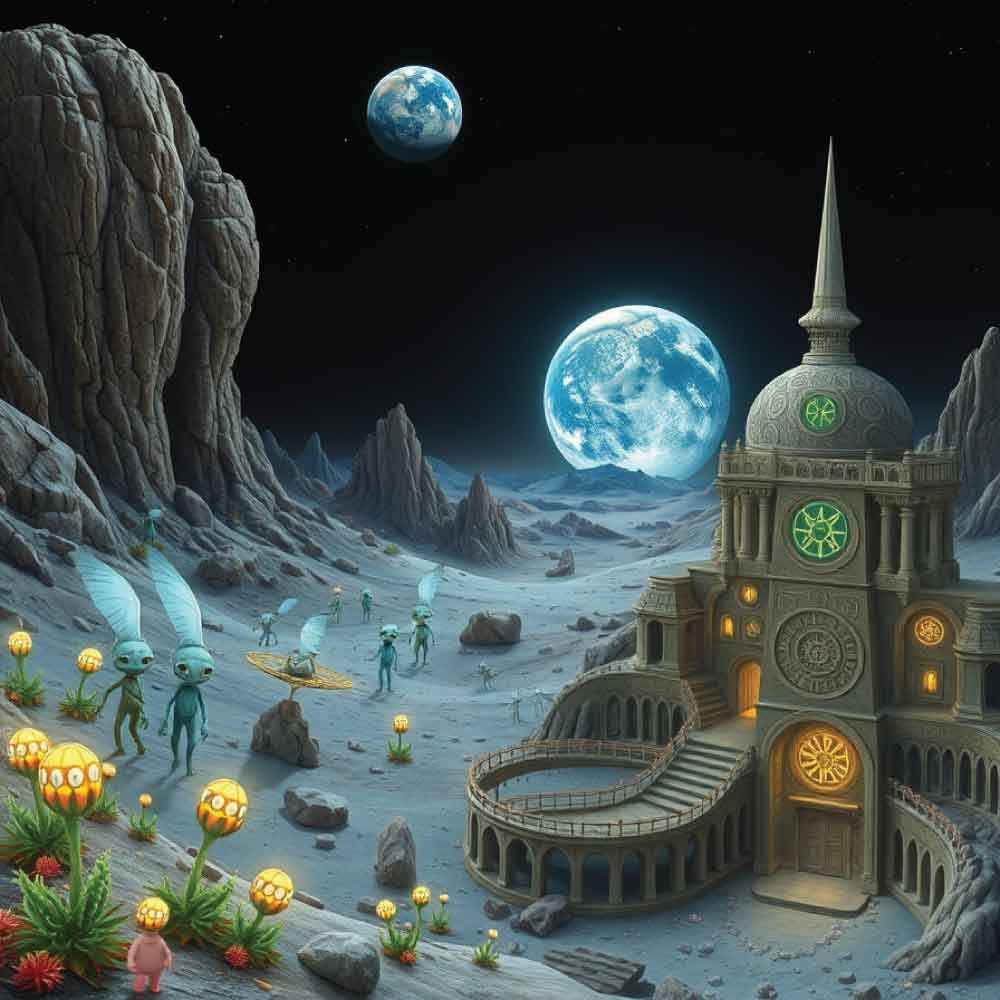
Is There Alien Life on the Moon? Shocking New Science Says Maybe!
