
Living on the International Space Station: Fun and Surprising Facts About Life in Space
You wake up floating gently in your sleeping bag. Earth spins below you. The Sun rises every 90 minutes. This is everyday life on the International Space Station, or ISS. The ISS is a huge floating lab about 250 miles above Earth. It has been home to people nonstop since November 2000. That means over 25 years of continuous human life in space. What an amazing record!
The station is as big as a large house inside. It has sleeping spots, bathrooms, a gym, kitchens, and giant windows for stunning views. In 2026, Expedition 74 is underway. Crew members include NASA astronauts like Jessica Meir and Jack Hathaway, plus partners from ESA and Roscosmos. They arrived on SpaceX Crew-12 in February 2026. Seven people from different countries live and work together up there right now.
A typical day starts around 6 a.m. station time. Alarms wake them because there is no natural morning light. First, they check the station systems. Then comes breakfast. Food is packed in special pouches or containers. No crumbs allowed they float and can cause trouble in machines. Many astronauts say food tastes less strong in space, so they enjoy spicy options. They drink from pouches or clever cups that hold liquid without spilling.
After eating, the schedule gets busy. Every moment is planned carefully. The main job is science. Astronauts run experiments that only work in microgravity. Fire burns in round balls instead of flames. Crystals grow bigger and better. Plants grow differently. In recent years, ISS research helped create a new cancer treatment medicine. It also led to 3D-printed medical implants for nerve repair and better pictures of the Sun’s outer layer.
Human health studies are super important. Without gravity, muscles get weak and bones lose strength. Fluids move to the head and can affect eyesight. To stay healthy, astronauts exercise two hours every day. They strap into special treadmills, ride bikes, and use resistance machines. It looks silly but works hard to keep their bodies strong for coming back to Earth.
Science fills most of the day. Crews grow plants, study tiny worms, test new materials, and check how microbes act in space. They even swab the outside during spacewalks to see if life can survive on the station walls. In 2025, researchers published a record 76 peer-reviewed papers from ISS work. That is the highest number ever. These studies help fight diseases, improve tech, and prepare for trips to the Moon and Mars.
But life is not only work. Chores take time too. Astronauts clean air filters, fix broken gear, and unload cargo ships. SpaceX Dragon and Northrop Grumman Cygnus bring fresh food, clothes, water, and new experiments. Water is smartly recycled. The system turns urine, sweat, and air moisture into clean drinking water. This saves tons of weight from Earth launches.
Personal time feels magical. Astronauts video chat with family, read books, listen to music, or snap photos of Earth. The view from the Cupola window is breathtaking. They see cities glowing at night, swirling storms, and colorful auroras. Some play instruments or watch movies when they have free moments.
Sleep is unique. No beds needed. Astronauts zip into small sleeping bags attached to walls. They float peacefully. Many say it is the best sleep because nothing presses on their back. Hygiene is different too. No showers water blobs would float everywhere. They use wet wipes, special shampoo, and a tiny bit of water. Toothpaste gets swallowed or spit into a tissue. The toilet uses suction instead of gravity. It takes some practice, but it works great.
Every 24 hours, the crew sees about 16 sunrises and sunsets. The station zooms around Earth at 17,100 miles per hour. In one day, it travels the distance to the Moon and back. That fast speed makes days feel short and exciting.
Teamwork makes the ISS special. Americans, Russians, Europeans, Japanese, and others share the space. They mostly speak English for work but swap foods and stories from home. It shows countries can cooperate peacefully high above Earth.
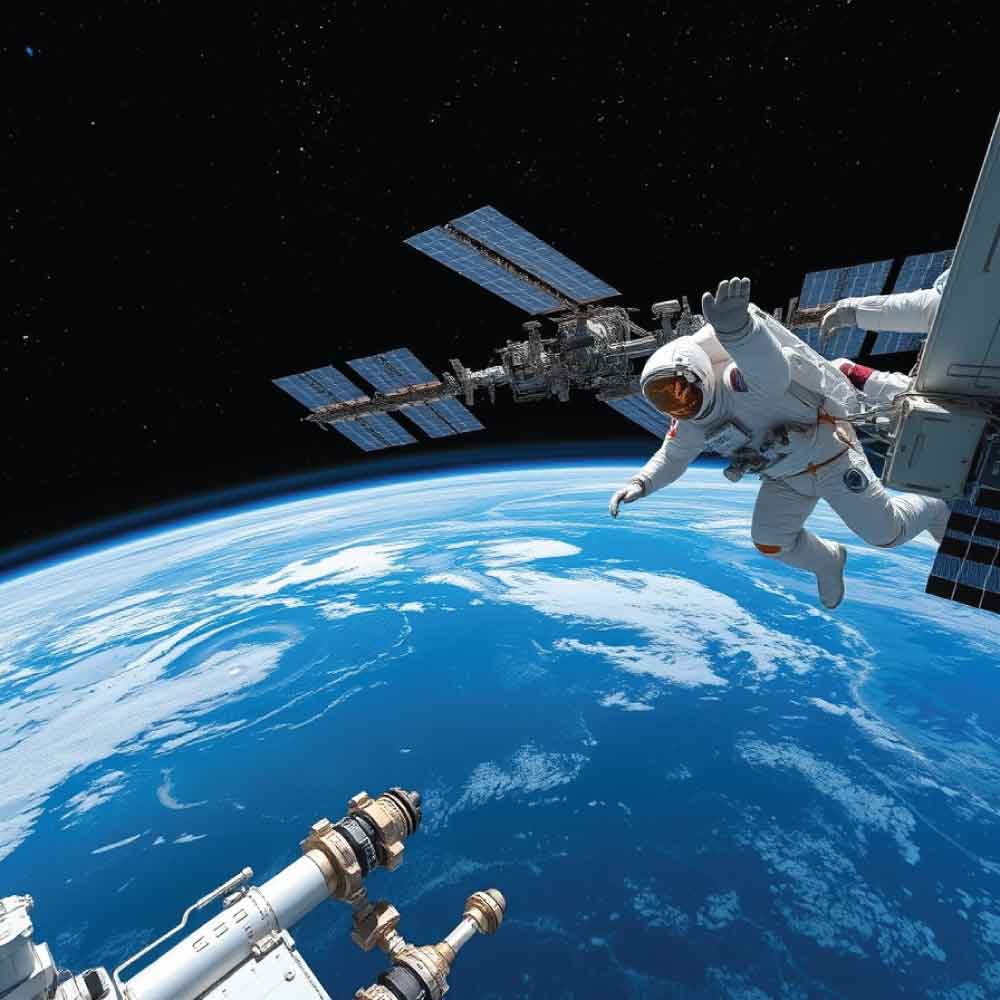
Spacewalks add real adventure. Astronauts put on bulky suits and step outside for repairs or upgrades. They train for hours in pools on Earth first. Recent spacewalks in 2026 included installing new solar array parts and swabbing for microbes. It is hard but thrilling work.
Health challenges are real on long missions. Bones, muscles, heart, and eyes change in space. NASA studies these effects closely. The knowledge helps create new medicines and exercise tools that benefit people on Earth too. For example, better ways to fight muscle loss help older adults or hospital patients.
The ISS has hosted nearly 300 people from 26 countries over 25 years. It started as a joint project between many nations. Today, commercial companies like SpaceX play a big role in sending crews and cargo. Private experiments also run on the station.
What comes next? NASA plans to keep the ISS running through at least 2030, maybe longer. After that, new commercial space stations could take over. The goal is no gap in human life in orbit. Lessons from the ISS will guide trips back to the Moon through Artemis and someday to Mars.
Kids love these stories. Floating food. Crazy hair that stands up. Watching Earth like a giant blue marble. Running experiments that help doctors back home. It sparks dreams of becoming scientists, engineers, or astronauts.
Daily life mixes routine with wonder. Wake up, exercise, eat, do science, enjoy the view, and laugh with crewmates. Simple things become puzzles without gravity. Yet astronauts stay cheerful and productive. They miss family and fresh air most, but the magic of space makes it worth it.
One astronaut said everything surprises you eating with a spoon upside down, sleeping while floating, moving in three dimensions. It all works in amazing ways.
The International Space Station is humanity’s outpost in space. It proves we can live and thrive away from Earth. Its research improves life here and prepares us for bigger adventures.
Next time you look up at night, think about the people floating above, working hard, and dreaming bigger. Life in orbit is busy, challenging, and full of surprises. It keeps getting more exciting every year.
Follow the latest ISS news. New crews arrive. Fresh discoveries happen. The station shows what humans can do when we work together.
