
Introduction
Have you ever heard of a fish that can shoot water like an expert marksman? The banded archerfish (Toxotes jaculatrix) is a remarkable fish known for its extraordinary ability to shoot water jets at its prey. This fascinating skill is not only a unique feature but also a crucial part of its survival. In this article, we’ll explore the banded archerfish’s scientific background, habitat, physical characteristics, and its mind-blowing hunting techniques. You’ll also discover how this incredible fish uses its skill to thrive in the wild.
| Aspect | Details |
|---|---|
| Scientific Name | Toxotes jaculatrix |
| Family | Toxotidae |
| Habitat | Found in brackish waters, including mangroves, estuaries, and river mouths. |
| Diet | Omnivorous: Insects, crustaceans, small fish, and plant matter. |
| Water-Shooting Skill | Can shoot water jets with incredible precision to knock down insects and small animals. |
| Size | Medium-sized: Typically 25–30 cm, can reach up to 45 cm in some cases. |
| Lifespan | Lives 7-10 years in the wild; shorter lifespan in captivity. |
| Schooling Behavior | Highly social fish that move in schools for protection and increased hunting success. |
| Reproduction | External fertilization in shallow waters with dense vegetation for egg protection. |
| Binocular Vision | Helps accurately judge distances when shooting water at prey. |
| Conservation Status | Least Concern on the IUCN Red List, but threatened by habitat destruction and pollution. |
| Breeding | Breeding is more challenging in captivity, requiring precise water conditions and careful care. |
| Aquarium Care | Requires brackish water, tall tanks for water-shooting behavior, and a varied diet. |
| Social Structure | Coexists with small reef fish and other brackish-water species, exhibiting learning behavior. |
| Threats | Urbanization, pollution, and deforestation threaten mangrove and estuary habitats. |
| Fun Fact | Can track falling prey and hit targets with amazing accuracy in milliseconds. |
What Is a Banded Archerfish?
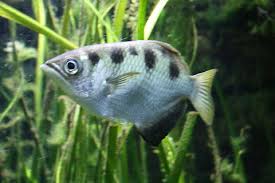
The banded archerfish belongs to the Toxotidae family and is classified under the Kingdom Animalia, Phylum Chordata, and Class Actinopterygii. Its scientific name is Toxotes jaculatrix, and it is one of the most remarkable species of archerfish. This fish is easily identifiable by its silvery body with distinctive black bands that run across its sides. Its body is shaped for agility and precision, with a dorsal fin located towards the rear, aiding in swift movements through the water.
The name “archerfish” comes from the fish’s remarkable ability to shoot water at its prey, just like an archer would shoot an arrow. This name reflects its hunting prowess and its ability to hit targets with incredible accuracy.
Habitat & Distribution
The banded archerfish is native to the brackish waters of the Indo-Pacific region, where it thrives in mangroves, estuaries, and river mouths. This fish is highly adaptable, capable of living in fresh, brackish, and even saltwater environments. Its versatility in habitat allows it to be found across a wide range of locations, from Southeast Asia to parts of Australia.
Due to its tolerance for varying salinity levels, the banded archerfish is often found in areas where freshwater meets the ocean, making it an expert in navigating changing water conditions. Its ability to live in both brackish and freshwater makes it an adaptable species within its ecosystem.
Physical Characteristics
The banded archerfish is a medium-sized fish, typically growing to an average length of 25 to 30 cm, although some individuals can reach lengths of up to 45 cm. The most striking feature of this fish is its silvery body adorned with black band-like markings that give it a distinctive appearance. These markings serve as camouflage, allowing it to blend seamlessly with its environment.
In addition to its unique color patterns, the banded archerfish has specialized features that aid in its remarkable hunting technique. One such feature is its binocular vision, which allows the fish to accurately judge distances when shooting water at prey. Its body design is built for surface feeding, with a mouth that can rapidly shoot water at targets located above the water’s surface.
Amazing Hunting Skills: Shooting Water
The banded archerfish is best known for its incredible ability to shoot water with precision. This hunting method involves the fish shooting a jet of water from its mouth at prey that is perched above the water, such as insects or small animals. The fish creates a tube-like structure with its mouth and uses powerful water jets to knock its prey off branches or surfaces.
The range of the water jet can be impressive, with larger fish able to shoot water as far as 2 to 3 meters. What’s even more amazing is the fish’s ability to compensate for refraction—the bending of light as it moves through water. This allows the fish to adjust its aim, ensuring that the water jet hits its target with pinpoint accuracy, even when the prey is above the surface. This skill is especially effective in hunting insects that might otherwise be out of reach.
Diet & Feeding Behavior
The banded archerfish is an omnivorous feeder, consuming a wide range of foods, including insects, crustaceans, small fish, and even plant matter. Its hunting strategy is based on its ability to shoot water to bring down prey that is either on the surface of the water or hanging from nearby plants.
The banded archerfish primarily hunts during the daytime, targeting terrestrial prey like insects and small animals. What’s truly fascinating is how young archerfish improve their accuracy. They learn by schooling with older, more experienced fish, honing their water-shooting skills as they grow. This ability to learn and adapt is one of the reasons the archerfish is such a successful predator.
Behavior & Social Structure
The banded archerfish is a highly social fish, often found in schools that provide protection and increase their chances of successful hunting. This schooling behavior is essential for their survival in the wild, as moving in groups allows them to find food more easily and defend against predators. Schooling also plays a key role in their water-shooting abilities. The younger archerfish learn from more experienced fish, improving their accuracy and coordination in hunting.
While the banded archerfish primarily interacts with its own species, it also coexists peacefully with other species in its habitat. The archerfish often shares spaces with small reef fish and other brackish-water species. Its social behavior helps it adapt to environments where it must navigate both aquatic and terrestrial threats, such as insects perched above the water’s surface.
Reproduction & Lifespan
In the wild, the banded archerfish spawns in shallow waters, typically in areas with dense vegetation where the eggs can remain hidden from predators. The breeding process involves both the male and female releasing eggs and sperm into the water, where fertilization occurs externally. Breeding in captivity can be more challenging due to the need for specific water conditions and careful monitoring of both water quality and temperature.
The lifespan of a banded archerfish varies, with individuals living for up to 7 to 10 years in the wild, depending on environmental factors like food availability and water conditions. In aquariums, their lifespan may be slightly shorter due to less-than-ideal conditions, but with proper care, they can live for several years. To ensure a longer lifespan, it’s crucial to provide the correct tank setup and diet, closely mimicking their natural environment.
In Aquariums: Care & Challenges
The banded archerfish is a popular choice for aquariums due to its unique appearance and fascinating water-shooting abilities. However, keeping this fish in captivity can be quite challenging. It requires brackish water, meaning aquarium owners must carefully maintain a specific salinity level to keep the fish healthy.
In addition to brackish water, the banded archerfish needs tall tanks to perform its water-shooting behavior. Providing vertical space is essential for the fish to aim and shoot at prey, which is why traditional shallow tanks may not be suitable. Another challenge is providing a varied diet—banded archerfish require both terrestrial insects and aquatic food to thrive. Regular feeding of live insects or specially formulated foods will help meet their nutritional needs and ensure they remain healthy in captivity.
Conservation Status
The banded archerfish is currently listed as Least Concern on the IUCN Red List. However, despite this status, there are still threats to its population, particularly related to habitat destruction. Mangroves and estuaries, which are critical for the archerfish’s survival, are increasingly threatened by urbanization, pollution, and deforestation. These ecosystems are not only important for providing shelter and food but are also vital breeding grounds for many aquatic species.
To protect the banded archerfish, conservation efforts must focus on preserving these fragile habitats. Promoting sustainable practices in coastal development and better protection of mangrove forests are key to ensuring that this unique species continues to thrive.
Fun Facts & Myths
The banded archerfish is full of surprises, especially regarding its hunting abilities and learning skills. Here are some fun facts:
- Incredible Aim: The banded archerfish can shoot water with such precision that it can knock down insects perched several feet above the water’s surface.
- Learning Skills: Young archerfish improve their water-shooting accuracy by observing and learning from more experienced individuals in their school. This ability to adapt and refine their skills makes them fascinating to study.
- Speedy Hunter: Archerfish can track falling prey with astonishing speed and accuracy, often hitting their target in just milliseconds.
Despite their remarkable abilities, there are some myths about the banded archerfish. For example, some believe that the fish can shoot water like a laser. However, this water-shooting skill relies on the fish’s specialized mouth structure and focus, not a supernatural ability.
Conclusion
The banded archerfish is truly one of nature’s most fascinating creatures. From its unique water-shooting skill to its social behavior and adaptability to different habitats, it stands out as an extraordinary example of evolutionary ingenuity. This fish showcases the wonders of aquatic life and reminds us of the importance of preserving fragile ecosystems like mangroves and estuaries, which are vital for the survival of species like the banded archerfish.
If you enjoyed learning about this incredible fish, share this article with others, leave a comment with your thoughts, or continue exploring the amazing world of aquatic life. Let’s continue to appreciate and protect the fascinating creatures that inhabit our oceans and freshwater systems!
