
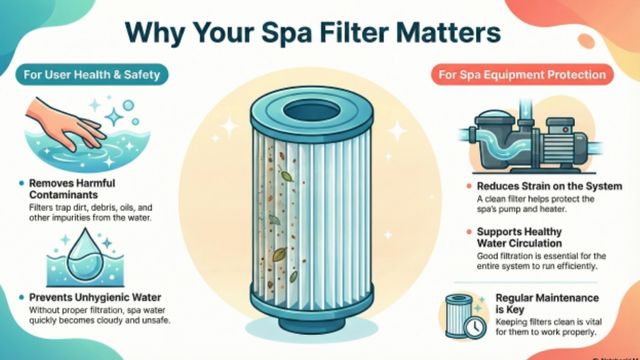
Spa filters are an essential part of any hot tub or spa system. They remove dirt, debris, oils, and other contaminants from the water, helping keep it clean and safe for use. Without proper filtration, spa water can quickly become cloudy and unhygienic.
The main role of spa filters is to protect both users and spa equipment. Clean filters improve water quality, support healthy circulation, and reduce strain on the pump and heater. There are different types of spa filters available, and regular maintenance is key to keeping them working properly.
What Are Spa Filters?
Spa filters are components designed to trap and remove unwanted particles from spa or hot tub water. Their main purpose is to maintain water clarity and support safe soaking conditions.
How Spa Filters Work
Spa water is pulled through the filter by the pump. As water passes through the filter material, dirt, hair, oils, and small particles are captured. Clean water then flows back into the spa.
Spa Filters vs Pool Filters
While spa and pool filters work on the same principle, spa filters are smaller and designed for higher temperatures and more frequent use. Spa filters also require more regular cleaning because spas hold less water than pools.
Why Spa Filters Are Important
Spa filters play a critical role in spa performance and user safety.
- Keep water clean and clear
- Protect the spa pump and heater from damage
- Improve water circulation and efficiency
- Reduce bacteria, contaminants, and skin irritants
Clean spa water not only looks better but also feels better and smells fresher.
Types of Spa Filters
Cartridge Spa Filters
Cartridge spa filters are the most common type used in hot tubs.
How they work:
They use pleated polyester fabric to trap dirt and debris.
Pros:
- Easy to clean
- Affordable
- Good filtration for most spas
Cons:
- Need frequent cleaning
- Require replacement over time
Sand Filters (Spa-Compatible Systems)
Sand filters are more common in pools but are sometimes used in large spa systems.
How they work:
Water passes through special filter sand that traps contaminants.
Advantages:
- Long-lasting media
- Less frequent deep cleaning
Disadvantages:
- Not ideal for small spas
- Lower filtration precision compared to cartridges
Diatomaceous Earth (DE) Filters
DE filters provide very fine filtration using fossilized diatoms.
Benefits:
- Excellent water clarity
- Traps extremely small particles
Maintenance:
- Requires careful handling
- More complex cleaning process
DE filters are usually found in advanced or commercial spa systems.
Choosing the Right Spa Filter
Selecting the correct spa filter is essential for performance and safety.
- Match the filter size and model to your spa
- Check filter length, diameter, and end caps
- Follow manufacturer recommendations
- Ensure proper flow rate and filtration capacity
Using the wrong filter can reduce water flow and damage spa components.
How Often Should You Clean or Replace Spa Filters?
Cleaning frequency:
- Light use: once every 2–3 weeks
- Heavy use: weekly cleaning
Signs your spa filter needs cleaning:
- Cloudy water
- Reduced water flow
- Strong odors
Replacement:
Most spa filters last 12–18 months, depending on usage and care.
How to Clean Spa Filters Properly
Proper cleaning extends filter life and improves filtration.
- Rinse with a garden hose to remove loose debris
- Use a spa filter cleaner for deep cleaning
- Soak filters as recommended by the product instructions
Avoid:
- High-pressure washers
- Harsh household chemicals
These can damage filter pleats and reduce effectiveness.
Signs of a Dirty or Failing Spa Filter
Common warning signs include:
- Cloudy or foamy water
- Reduced jet pressure
- Increased chemical usage
- Unusual pump or motor noise
Ignoring these signs can lead to costly spa repairs.
Spa Filter Maintenance Tips
- Rotate between two filters to extend lifespan
- Inspect filters regularly for tears or damage
- Store spare filters in a clean, dry place
- Maintain proper water chemistry
Balanced water helps prevent filter clogging and buildup.
Common Spa Filter Problems and Solutions
- Clogged filters: Clean or soak with filter cleaner
- Torn pleats: Replace the filter immediately
- Poor filtration: Check compatibility and water balance
- Incorrect sizing: Use manufacturer-approved filters
Regular checks can prevent most filter-related issues.
Spa Filters vs Pool Filters
Spa filters differ from pool filters in several ways:
- Smaller size and higher flow demands
- Designed for hot water and frequent use
- Require more frequent cleaning
Pools hold more water, so their filters can operate longer between cleanings.
Frequently Asked Questions (FAQs)
How long do spa filters last?
Most last 1 to 1.5 years with proper care.
Can I use a pool filter in a spa?
No, pool filters are not designed for spa systems.
Are reusable spa filters worth it?
Yes, they save money over time and reduce waste.
Do spa filters remove bacteria?
They remove particles, but proper sanitation is still required.
Environmental and Cost Considerations
Reusable spa filters are more eco-friendly than disposable ones. They reduce waste, save water through better circulation, and lower long-term maintenance costs.
Although high-quality filters may cost more upfront, they usually provide better value over time.
Conclusion
Spa filters are essential for clean water, efficient spa performance, and user safety. Choosing the right filter and maintaining it properly ensures a better spa experience and longer equipment life.
Regular cleaning, timely replacement, and proper water chemistry are simple steps that deliver the best results. With good care, your spa filter will keep your water clear, safe, and enjoyable year-round.
